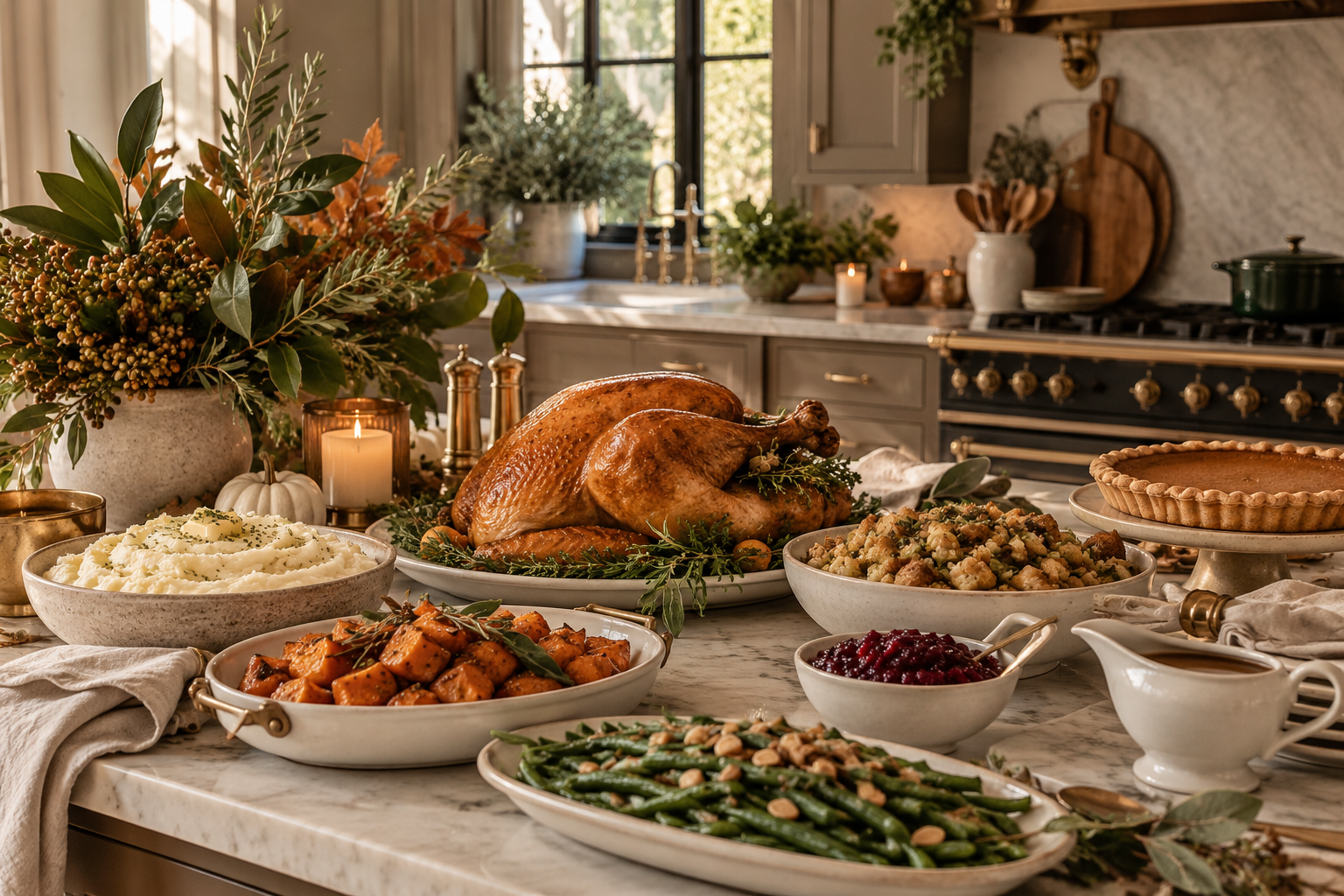
There’s a particular kind of magic to a Thanksgiving table set against golden autumn light — the clink of glasses, the low hum of conversation, the smell of roasting herbs drifting from the kitchen. Hosting a gluten-free Thanksgiving menu doesn’t mean sacrificing any of that warmth or abundance. With a little planning and a few smart swaps, you can create a spread that’s naturally inclusive, deeply flavorful, and just as beautiful as the holiday deserves. This guide walks you through every course — from appetizers to dessert — along with a shopping list, a make-ahead timeline, and tips for keeping the kitchen safe for gluten-free guests.

Planning Your Gluten-Free Thanksgiving Menu
Thoughtful Thanksgiving menu planning starts a week or two before the big day. Begin by mapping out your courses — appetizers, a main, sides, stuffing, gravy, and dessert — then identify which traditional recipes need a gluten-free adaptation. Many Thanksgiving staples are naturally gluten-free (think roasted vegetables, mashed potatoes, and a simple roast turkey), while others, like stuffing and gravy, typically need a thoughtful substitution. Always verify ingredient labels, since gluten can hide in broths, spice blends, and pre-made mixes, and lean on tested recipes for precise measurements rather than improvising ratios on the day itself.
If you love bringing this kind of intention to every gathering, you may enjoy our other seasonal recipes and holiday entertaining guides for inspiration beyond the Thanksgiving table.

Gluten-Free Appetizers to Start the Feast
Set a welcoming tone with a few simple, naturally gluten-free appetizers that let guests mingle before the main event. Consider:
- Baked Brie with Cranberry Mostarda & Gourmet Gluten Free Seed Crackers
- Endive Spears with Whipped Goat Cheese, Pear & Pomegranate
- Roasted butternut squash soup shooters served in small glasses
- Crispy Polenta Rounds with Whipped Ricotta, Fig & Sage
- Harvest Pear & Arugula Bites
- The Golden Orchard Cheese Board
- Cranberry festive spritzer
Always double-check that crackers, pre-made dips, and seasoning blends are certified gluten-free, as cross-contact and hidden gluten can sneak into packaged products. Serve appetizers with small, clearly labeled signs so guests with dietary needs can help themselves with confidence.
Choosing and Preparing Your Turkey
A simply roasted turkey is naturally gluten-free, but it’s worth paying close attention to a few details. Some pre-basted or self-brining turkeys contain gluten-based additives in their injection solution, so read the label carefully or choose a plain, unseasoned bird and season it yourself. Brines, rubs, and bastes should be made with gluten-free broth, tamari instead of soy sauce, and herbs rather than pre-mixed seasoning packets that may contain hidden wheat starch.
For serving guidance, plan on about 1 to 1.5 pounds of turkey per person if you want generous leftovers, and always use a meat thermometer to confirm the thickest part of the thigh reaches a safe internal temperature. Let the turkey rest for at least 20 minutes before carving so the juices redistribute. As always, follow a tested recipe for exact roasting times and temperatures based on your turkey’s size.
A reliable instant-read meat thermometer and a sturdy roasting pan with a rack are worth having on hand for consistent, evenly cooked results.
Gluten-Free Holiday Sides Everyone Will Love
Gluten-free holiday sides are often the easiest part of the menu to adapt, since so many classics are naturally free of wheat. A few favorites to include:
Crisp-Edged Mandolin Potato Stacks (Muffin-Tin Gratin)
Paper-thin mandolin-sliced potatoes are layered with cream, butter, and sea salt, then baked in a muffin tin until the edges frill up golden and crisp while the centers stay soft and silky. These individually portioned, naturally gluten-free potato stacks look elegant on a Thanksgiving plate, deliver all the flavor of a classic gratin without the fuss, and are practical to serve piping hot straight from the pan.

Roasted Root Vegetables
Carrots, parsnips, and Brussels sprouts tossed in olive oil and roasted until caramelized are naturally gluten-free and endlessly customizable with fresh herbs.

Blistered Green Beans with Garlicky Wild Mushrooms & Lemon Herbed Gremolata (Gluten-Free)
Elevate your Thanksgiving table with this elegant gluten-free side of blistered green beans tossed with a tumble of garlicky wild mushrooms, bright lemon zest, and a shower of fresh herbs—no canned soup, no almonds, just deeply caramelized flavor and crisp-tender texture in every bite.

Sweet Potato Casserole
This one is my dad’s favorite for a reason! Top with a gluten-free oat and pecan streusel instead of a flour-based crumble for a texture everyone will enjoy.

Festive Gluten-Free Cornbread Stuffing with Herbs & Buttery Edges
This festive gluten-free cornbread stuffing turns **certified gluten-free cornbread** into a savory showstopper, with rich buttery edges and a tender, flavorful center. Start with day-old, toasted cubes of certified gluten-free cornbread so they stay sturdy when soaked in broth. Sauté plenty of celery and onion in butter or olive oil until soft and fragrant, then fold them into the cornbread with fresh sage, thyme, and a splash of gluten-free chicken or vegetable broth. Bake until the top is deeply golden and crisp at the corners, the middle is moist but not soggy, and every bite delivers cozy holiday flavor without a trace of gluten.
Because gluten-free breads can vary widely in texture, follow a tested gluten-free stuffing recipe for the right liquid-to-bread ratio rather than guessing, and bake the stuffing separately from the turkey to avoid any cross-contact with gluten-containing juices or drippings.

Gluten-Free Gravy Made Simple
Gluten-free gravy is one of the simplest swaps on the entire menu. Instead of thickening pan drippings with all-purpose flour, use a cornstarch or gluten-free flour blend slurry, whisked thoroughly into the warm drippings over gentle heat until it reaches a silky consistency. Cornstarch tends to create an especially glossy, restaurant-quality gravy, while a gluten-free flour blend gives a slightly more traditional, matte finish.
Whatever thickener you choose, confirm your turkey stock or broth base is labeled gluten-free, since some brands use wheat-derived ingredients as fillers. For exact ratios of fat, liquid, and thickener, rely on a tested gravy recipe rather than eyeballing it.

Gluten-Free Desserts for a Sweet Finish
No Thanksgiving table feels complete without dessert, and gluten-free versions of the classics are easier than ever to achieve. Consider a gluten-free pumpkin or pecan pie made with a gluten-free pie crust blend, a flourless chocolate torte for a rich, naturally gluten-free option, or a simple baked apple or pear crisp topped with a gluten-free oat crumble. A pitcher of lightly spiced whipped cream and a bowl of fresh pomegranate seeds make an elegant, low-effort finishing touch for any of these desserts.
As with the rest of the menu, double-check pre-made pie crusts, graham cracker crumbs, and spice blends for hidden gluten, and follow a tested dessert recipe for baking times and ratios.
The Categorized Gluten-Free Thanksgiving Shopping List
A well-organized shopping list is the backbone of a smooth gluten-free Thanksgiving menu. Shop early for shelf-stable items and save fresh produce and dairy for the last few days before the holiday.
Pantry & Dry Goods
- Certified gluten-free all-purpose flour blend
- Cornstarch for gravy
- Certified gluten-free cornbread for stuffing
- Gourmet gluten-free seed crackers
- Gluten-free pie crust mix or store-bought crust
- Gluten-free broth or stock (chicken and vegetable)
- Pure vanilla extract, cinnamon, nutmeg, and other spices
- Rosemary crackers
- Fig preserves
- Cranberry mostarda
- Pumpkin seeds and mixed seeds
- Polenta
- Honey and hot honey
Produce
- Russet or Yukon Gold potatoes, plus sweet potatoes
- Carrots, parsnips, and Brussels sprouts
- Celery and yellow onions
- Fresh sage, thyme, and rosemary
- Apples or pears for appetizers and dessert
- Pomegranate for garnish
- Fresh green beans
- Assorted wild mushrooms
- Garlic
- Lemons
- Fresh parsley
- Fresh chives
- Butternut squash
- Pears
- Grapes for roasting
- Fresh rosemary
- Endive
- Fresh figs
Dairy & Refrigerated
- Unsalted butter
- Heavy cream
- Goat cheese and brie
- Eggs
- Parmesan cheese, if needed for potato stacks
- Aged cheddar
- Triple-cream cheese
- Crème fraîche
- Ricotta
Protein & Main Dish
- A plain, unseasoned turkey (check labels if pre-brined)
- Tamari as a gluten-free soy sauce substitute
Make-Ahead Timeline for a Stress-Free Day
Spreading tasks out over several days keeps the kitchen calm and gives you more time to enjoy your guests. An organized kitchen is especially helpful on a multi-course holiday, so set aside a little time in advance to sort tools and clear counter space.
One to Two Weeks Ahead
Finalize your menu, place your turkey order, and complete the shelf-stable portion of your shopping list.
Two to Three Days Ahead
Thaw a frozen turkey in the refrigerator, bake and cube gluten-free bread for stuffing, and prepare any pie dough or crusts.
The Day Before
Bake pies and desserts, chop vegetables for sides and stuffing, make cranberry sauce, and set the table — this is a great moment to experiment with table setting ideas that match your seasonal color palette.
Thanksgiving Day
Roast the turkey, bake the stuffing separately, warm sides, make gravy just before serving, and set out appetizers as guests arrive.
Preventing Cross-Contact in the Kitchen
Cross-contact happens when gluten-free food comes into contact with gluten-containing ingredients, surfaces, or utensils, and it’s an easy thing to overlook in a busy holiday kitchen. A few simple habits make a big difference:
- Use separate cutting boards, utensils, and colanders for gluten-free dishes
- Wash counters, pans, and hands thoroughly before preparing gluten-free items
- Prepare gluten-free stuffing and side dishes before any gluten-containing dishes, if possible
- Use clean, dedicated utensils for serving, and avoid double-dipping shared spoons
- Label each dish clearly so guests know which items are gluten-free
- Store gluten-free bread and ingredients separately from wheat-based products
Frequently Asked Questions
Is turkey naturally gluten-free?
Plain turkey is naturally gluten-free, but always check labels on pre-basted, self-brining, or flavor-injected turkeys, as some contain gluten-based additives.
What can I use instead of flour to thicken gravy?
Cornstarch or a gluten-free flour blend both work well as thickeners. Whisk the thickener with a small amount of cold liquid before adding it to warm drippings to avoid lumps.
How do I make stuffing gluten-free without sacrificing flavor?
Use a sturdy gluten-free bread, or gluten free corn bread, toast it well, and build flavor with sautéed aromatics, fresh herbs, and a generous amount of broth, following a tested recipe for the right ratio of liquid to bread.
Can I prepare a gluten-free Thanksgiving menu for a mixed group of guests?
Yes. Many hosts simply make the entire menu gluten-free so everyone can eat the same dishes without any separate preparation, which also simplifies cross-contact prevention.
Conclusion
A gluten-free Thanksgiving menu doesn’t require compromise — just a bit of extra label-reading, a little advance planning, and recipes you trust for exact measurements. With a thoughtful shopping list, a realistic make-ahead timeline, and a few cross-contact precautions, you can gather everyone around a table that feels warm, generous, and entirely worry-free. However you set your table this year, we hope this guide helps make the holiday feel a little easier, and a lot more delicious.
This post may contain affiliate links. If you make a purchase through these links, I may earn a small commission at no additional cost to you. Thank you for supporting Latte & Luxe.
Leave a Reply